
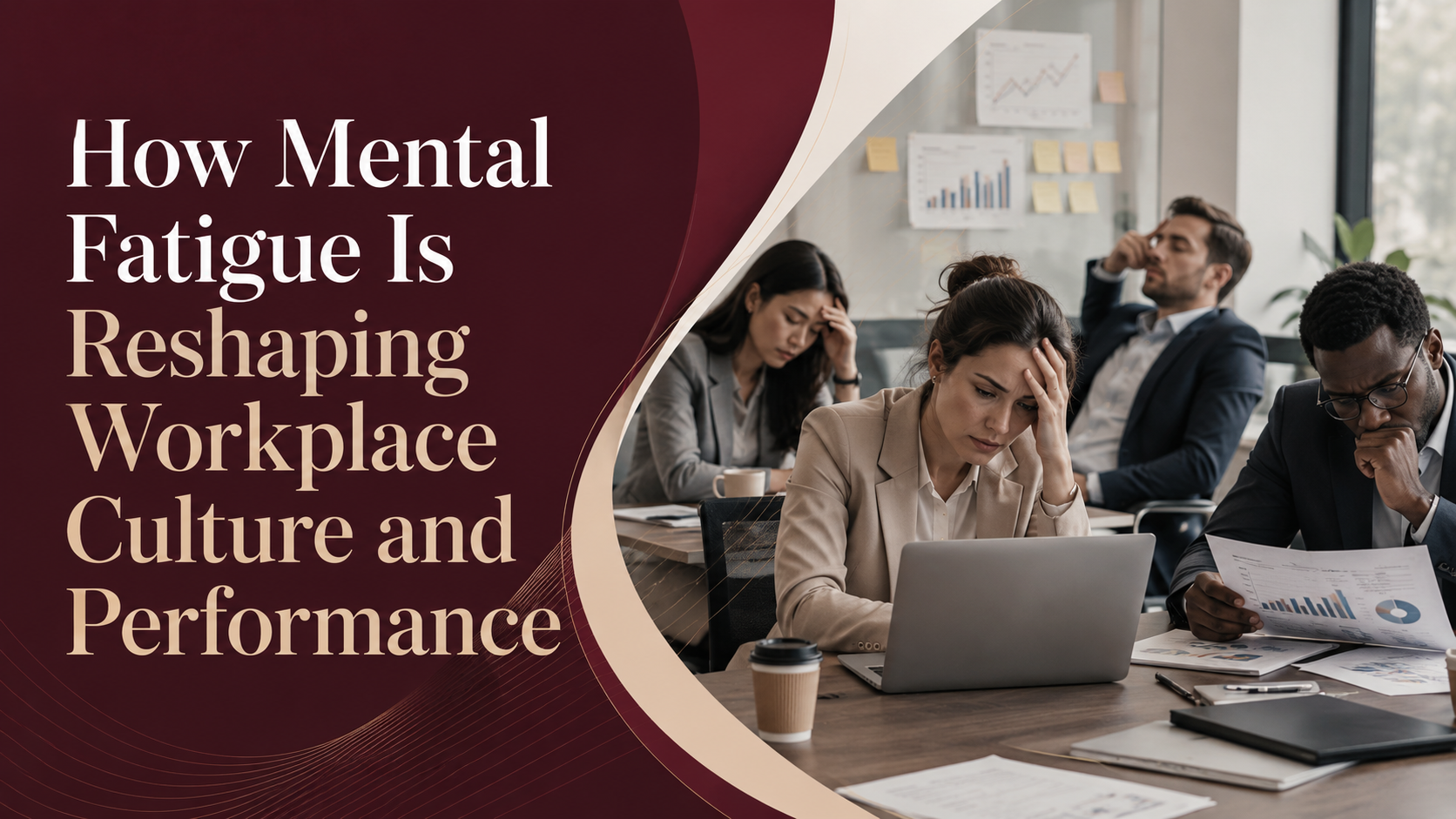
“Mental fatigue is no longer a private struggle employees carry alone because it has become a structural force reshaping how people think, interact, and perform at work. Leaders across industries see the same pattern as employees show up yet their capacity slips, decisions slow, conflicts escalate, engagement drops, productivity becomes inconsistent, and culture shifts quietly.”
Mental fatigue is no longer a private struggle employees carry alone because it has become a structural force reshaping how people think, interact, and perform at work. Leaders across industries see the same pattern as employees show up yet their capacity slips, decisions slow, conflicts escalate, engagement drops, productivity becomes inconsistent, and culture shifts quietly.
This is not a motivation issue because it is a resilience deficit.
Resilience research shows that mental fatigue is one of the earliest indicators of burnout, conflict, and disengagement, and the Currency of Resilience Guide reinforces this by noting that “we can't think our way out of burnout when our bodies are depleted… we can't build strong relationships when our emotional reserves are empty.” Mental fatigue drains the cognitive and emotional resources employees rely on to solve problems, regulate emotions, collaborate, and make decisions, and when those reserves collapse, culture collapses with them.
The Real Reason Mental Fatigue Is Rising
Mental fatigue is the depletion of cognitive and emotional bandwidth, and it shows up as slower thinking, difficulty concentrating, emotional reactivity, and avoidance of conversations or decisions. Resilience frameworks describe this as Cognitive Clutter, where, the mind never stops running and conversations are replayed, decisions are overanalyzed, and attention jumps from one crisis to the next.
Employees today face constant change, high emotional labour, information overload, unresolved conflict, and increased mental health strain, and these pressures create a perfect storm for mental fatigue to spread across teams.
How Mental Fatigue Rewrites Workplace Culture
1. It Silences Psychological Safety
Mentally tired employees stop speaking up, withdraw from collaboration, and avoid difficult conversations because emotional overload drains the energy needed to manage tension and expectations.
2. It Erodes Trust and Team Relationships
Mental fatigue reduces emotional bandwidth, and employees lose patience faster as misunderstandings escalate and small issues become big conflicts, creating relational drain where unbalanced relationships erode trust and increase stress hormones.
3. It Slows Decision‑Making and Execution
Fatigued minds struggle with clarity as leaders replay conversations, overanalyze decisions, and lose momentum, which mirrors the Cognitive Clutter pattern identified in resilience diagnostics.
4. It Fuels Burnout and Disengagement
Mental fatigue is the earliest stage of burnout, and when ignored, it becomes emotional exhaustion, absenteeism, and turnover, driving up the costs of disengagement and burnout‑related sick days across the organization.
5. It Creates a Culture of Survival Mode
Teams stop innovating, learning, and connecting when mental fatigue spreads, and they do the minimum required to get through the day, which is the opposite of resilience wealth—defined as the internal energy capital that sustains focus, creativity, and decision‑making under pressure.
Why Leaders Must Address Mental Fatigue Now
Mental fatigue is not a personal weakness because it is a workplace risk factor that directly affects performance, relationships, and culture. Resilience systems emphasize early warning indicators that help leaders spot burnout and disengagement before they become crises, and ignoring mental fatigue leads to higher turnover, lower productivity, more conflict, poor collaboration, and cultural instability, while addressing it leads to higher engagement, better decision‑making, stronger relationships, sustainable performance, and a healthier workplace culture.
How to Reverse Mental Fatigue in the Workplace
1. Measure Cognitive and Emotional Load
Use diagnostics such as the WIS® Resilience Index to identify hidden energy leaks because these tools reveal how cognitive overload impacts productivity and decision‑making capacity.
2. Build Resilience Capacity Across All Nine Dimensions
Mental fatigue rarely comes from a single issue, and resilience ebbs and flows across nine dimensions that must be strengthened in an integrated way.
3. Strengthen Psychological Safety
Create environments where employees can share concerns, name pressures, and ask for support before issues escalate into crises.
4. Reduce Cognitive Clutter
Introduce practices that reduce overload, clarify priorities, and protect focus so employees can think clearly and execute consistently.
5. Address Relational Drain
Equip leaders to identify and resolve interpersonal stressors early so trust can be rebuilt and collaboration can become sustainable.
6. Provide Meaningful Recovery
Design recovery that restores mental and emotional capacity rather than relying solely on time off, ensuring employees return with renewed resilience instead of lingering fatigue.
Join the Conversation on Resilience Intelligence
Mental fatigue is quietly rewriting workplace culture, and leaders who ignore it will keep losing capacity, engagement, and trust, while leaders who address it will build workplaces that can sustain performance without breaking people.
If this resonates, it is time to move from awareness to action.
Start by mapping resilience in your workplace and identify where cognitive overload, relational drain, and survival‑mode behaviours are showing up on your team.
Bring this article into your next leadership or HR meeting and ask one question: Where are we seeing mental fatigue, and what are we willing to change?
Engage with the Currency of Resilience™ community to explore practical tools, diagnostics, and conversations that help leaders build resilience intelligence into everyday decisions and team practices.
Leaders and practitioners who are ready to address mental fatigue as a resilience issue are invited to connect, share experiences, and learn with others who are building workplaces that protect both performance and people.
#WorkplaceResilience #MentalFatigue #LeadershipDevelopment #EmployeeWellbeing #BurnoutPrevention #ResilienceIntelligence
How does this insight speak to your current season?
Connect with fellow community members, share your reflection, and explore weekly anchors in the Resilience Hub.
Cracking the Code on Your Resilience
Discover the 7 resilience currency streams and learn how to identify, replenish, and direct your personal resilience capacity.